The history of Romania suggests incessant strife among groups seeking survival or dominance: and larger-than-life leaders,
voivvodes and princes, all set in a stark and often brutal (as were the ages) narrative relief. An emergent strong impression is the ongoing courage and tragedy of the conquered, the fighting back, the briefly prevailing, only to be beset upon by another group. And always on the bottom: the Roma, old slave class of imported people, and poverty-ridden serfs, especially in
Transylvania. That site is pay-per-view JSTOR, so find it through the library.
Recalibrate from super-events to the more mundane realities.
- Reading: In Europe's Shadow, memoir-history-travelogue by Robert D. Kaplan 2016, review NYT. The author is a master of the visit-first, write later approach, with the full title including its scope, Europe's Shadow: Two Cold Wars and a Thirty-Year Journey Through Romania and Beyond. It fills in history that mere timelines cannot, because depth requires a narrative of experience, referencing art, movements. The focus on modern times is missed on many tours.
1. Value of a narrative. For a grounding in Romania, both narratives and timelines share a flaw: Variation in starting points, causations may be minimized.
- Begin at 1600, says the BBC.
- There find Phanariot Greeks, Ottomans, Habsburgs, Michael the Brave, areas of Transylvania, Wallachia, and Moldavia, Russian controls and administration, Romania teaming with Russia in the Russo-Turkish War, crushing peasant revolts, King Carol, Romania siding with Germany against Russia, Nicolai Ceaucescu, and then very modern times. That is a crazy quilt without frame.
- Try 1919 to 2012 at the BBC again.
- Try 8000 BCE to date, at http://www.localhistories.org/romaniatime.html. Better, but still just data.
- Try 104,000 BCE, at [104 mil BCE would be million? apparently not, try mil as thousand, see http://www.merriam-webster.com/dictionary/mil
2. Concepts in basic Romanian history
1,1 Empires: Byzantine, Ottoman, Habsburg, Russian. Yet the language harks back to Roman times, and the Latinate. Large area, periodic hackings to bits. Romania is a different mix from the Balkans ethnically, and economically. When to stop wars; when to intervene. Ethnocentric populism movements, see Shadow 75.
1.2 Geography: Carpathian Mountains separate Central from Eastern Europe. Wallachia is flat -- anyone can invade, Shadow at 81.
1.3 Role of Orthodoxy: Religious currents. Despite the Latinate roots, it is Orthodoxy that appears to dominate, not the Roman Catholic.
- Jews, and the Holocaust. A slaughter. Read Gregor von Rezzori's 1969 Memoirs of an Anti-Semite, a Romanian raised in Austria. See New Yorker at https://www.newyorker.com/magazine/1969/04/26/memoirs-of-an-anti-semite. Or at https://www.nyrb.com/products/memoirs-of-an-anti-semite?variant=1094930213. See Shadow at p.27, for the chasms between epochs. Shadow at 83 for stresses,
- Catholic and Orthodox. Holocaust, good and evil coexisting, Shadow at 118 ff. Architecture: Shadow at 214, "intimacy with wood", the monastic percussion semantron, or toaca, call to vespers for example, hear and see at https://www.youtube.com/channel/UCZVFxGCUWjvwZlgHtBBDXfg
1.4 Ongoing impact of Communism in the 1950's and after: an "indigestible" ethnic nation, see Shadow at 29. At 37 -- Communism uprooted traditions so the result is an unmatched kaleidescope. The need grows for impersonal laws, applicable to all, to avoid the intrigue and corruption that comes with weak institutions.
1.5 Historic Rulers:
- Mircea the Old, defeated Turks in Wallachia 1395, and again in 1400. Shadow at 67. See Romanian DVD at https://www.youtube.com/watch?v=aKRWTJ_TB24
- Stephen the Great, Stephen III, Moldavia, 1457-1504. a diplomatic ruler, Shadow at 69. Note that, as with western Catholicism, there are right-believers and there are heretics, here Stephen the Great is a Right Believer, see http://orthodoxwiki.org/Stephen_the_Great. When the views clash, comes war.
- Moldavia: torn off by Russia, apparently, see Shadow at 73, but won back after Russia lost the Crimea, all this takes more research
- Michael the Brave, ruled all 3 principalities, until his assassination in 1601, Shadow at 71. Romanian 1971 DVD at https://www.youtube.com/watch?v=oxv6LfcfryA
- Outsiders: Metternich
3. Specific places, asbridges to current issues
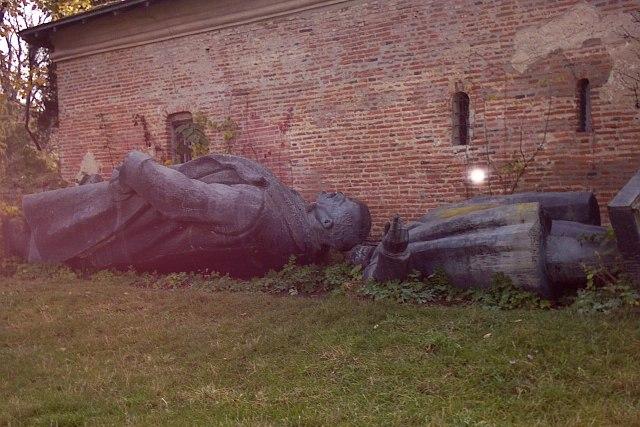
- Mogosoaia Palace, 1698-1702, near Bucharest. Shadow at 31. Here we found the toppled statue of Lenin, outside the old kitchens, see post. The palace blends influences of Turkey and Persia. It was built by the Wallachian Prince Constantin Brancoveanu, a man whose love of architecture blended West and Orient. His tragedy was having to play the Russian czar against the Ottoman sultan, and of course he lost. Beheaded. Romania's impossible.l choices.
- Brasov: Shadow at 183. Vlad was not there; hyped, privately owned. The city has more to offer, but the castle is pretty, and old. Just not a Vlad location.
- Moldova, Moldavia -- ongoing vulnerability, see Shadow at 175. Note the observation that the West offers, theoretically, the rule of law; which Russia does not, but the cultural ties and economic dependency supersedes, see Shadow at 174. Poland invades under Jon III Sobieski 1691, see Shadow at 195
- Sighetu Marmetiei, or Sighet, city where the Cold War prison (now a museum) is nearly next to the locked Jewish cemetery, city of Elie Wiesel, see Shadow at 216
- Hunedoara -- Hungarian Iancu de Hunedoars, and the castle, Shadow at 221. His victories held the Turks at bay for some 70
4. Mega-events then and now
Wars. The west of Romania, Eurasia, endured for example the 9 years' war, the 30 years' war, the 80 years' war, the 100 years' war, the 16th Century Italian wars, the 17th Century northern wars (Catholic crusading), The 18th Century Spanish succession wars. And more, sacks of cities Voivodes against Turks on their own. see Shadow at 44.
Early peoples: Scythians, Cimmerians, Getae. Shadow at 48. Spend time with early warrior cultures, because these spill into Russia, the Middle East, migrate north.
Cumans at 66 (the Basarabs, from whence came Vlad Tepes (see genetic haplogroup analyses of Y chromosome of persons with Basarab claims, at
http://journals.plos.org/plosone/article?id=10.1371/journal.pone.0041803 that suggests perhaps they were not were
Cuman, East Asian, after all). Yet, traditional "nations" groupings fall short, See
Shadow at 53. Individuals are short-circuited when immersed in broad groupings. Explore ideas of Latin-Romanian culture, juxtaposed with Orthodox. Regaining self-respect after immersion especially in Communism-Stalinism is a struggle,
Shadow at 56. Crowds, leaving behind individuality: to what end.
Romanians remained or sank back into status of a frontier people, under threat, constantly on the defense. Overview at Shadow 64ff, and explore varied histories of those now trying to live together including combinations of early settling Mongols, and now Sunni Muslim
Crimean Tatars.
1930's: Explore intellectuals -- this takes individual digging
5. Tethers
Romania is dependent on Russian natural gas for 1/4 of its needs,
Shadow at 48. Russian efforts to extend and incorporate Balkans into its pipeline networks are ongoing, keeping Ukraine and Moldova in upset cross-hairs.
Booklist in the nature of a library resource online: To recapture a sense of adventure, sweep, recollections of the author who loves his old paperbacks:
- C. R. Boxer 1977, The Portuguese Seaborne Empire 1415-1825; and others at p.xxviii
- The Governments of Communist East Europe by H. Gordon Skilling, with particular interest in geographical influences, p.xxiii
- 1901, Buddenbrooks, the Decline of a Family by Thomas Mann at p.xxix, review NYT See Shadow at 51 ff.
- Lord Jim; and Nostromo, by Joseph Conrad, p 12 -- empathy and objectivity; Romania having to liberate themselves as an extension of that idea, and some hopelessness
- Crowds and Power, Eelias Canetti 1960-- crowd as mass who abandon individuality and grasp an "intoxicating collective symbol" -- to "escape loneliness" ? See p.17
- No economic or political rest since the 1930's. Toll. P. 19, sources. Con artists survive better than those who play by rules, etc.
- Tolstoy, Resurrection, p.21
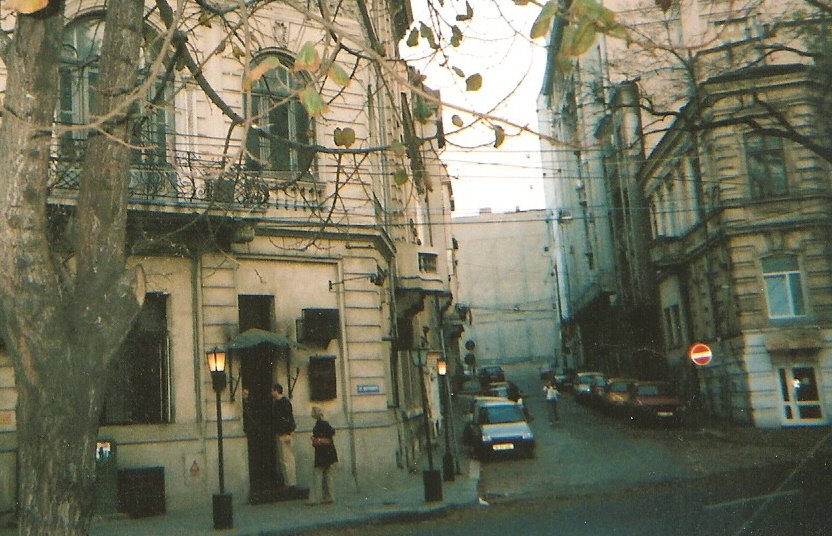 Dracula Club, Bucharest, Romania. Knock knock. Who answers.

 Horezu Monastery, Wallachia, Romania
 Court, Vlad III Tepes, Bucharest, Romania
 Dan Widing meets Dracula, Count Dracula Club, Bucharest, Romania (on Halloween)
 Michael the Brave, Cluj Napoca, Romania
 Ghencea Military Cemetery, Propeller Grave Markers, Bucharest, Romania
 Grave, Nicolai Ceaucescu, Ghencea Civil Cemetery, Bucharest, Romania
 Lake Snagov, Romania. Dockside view, from Complex Astoria resort.